

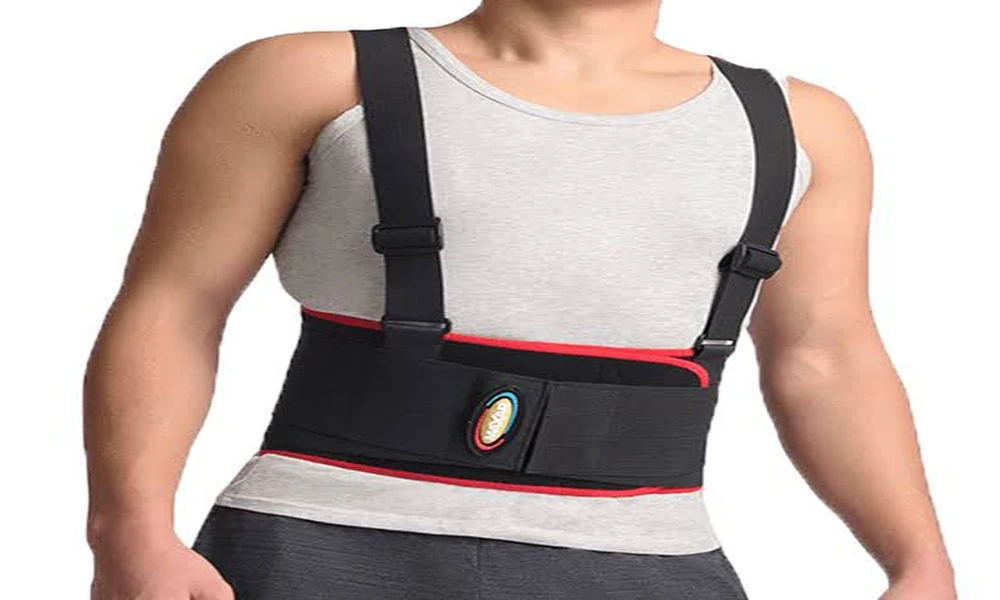
Any kind of lifting, whether you work as warehouse operator loading and uploading shipments every day, deliveryman that hauls the big boxes around or are body-builder in your own backyard gym at home, your physical activity can take some impressive toll on the entire body.
Among all the muscle groups and skeletal structures involved in a heavy lift, the lumbo sacral region of the spine bears the most intense burden. The area of your low back between the mobile lumbar spine and rigid sacrum is the pivot point, and absorbs impact for your entire torso.
Without appropriate strength, biomechanical support and correct technique, even just one improper movement or even excessive repetition can result in instant, crushing pain and disability. In industrial environments and athletic training alike, a specialized lumbo sacral belt is a fundamental piece of safety equipment.
In this blog, we will discuss all the information you need about using the lumbo sacral belt when lifting heavy objects. It explains how it protects your body, what features to look for and how to use it safely to get better performance.
Heavy Weight Lifting and Lower Spine Biomechanics
To understand why a spine belt is so necessary, it is important to know the extreme pressures your lower spine experiences while lifting a heavy object. While bending over or squatting to lift an object, your spine acts as a lever.
For every kilogram you lift, the actual mechanical stress multiplied across your lower lumbar vertebrae and spinal discs can be up to ten times greater, depending on your posture.
Whenever you round your lower back and it happens to slide out from the intended straight position the full force is applied directly onto those soft tissues, your muscles, and your inter-vertebral discs.
This may result in a sudden tear of muscles or ligaments, and possibly more seriously a slip disc that puts pressure on nearby nerves. The back belt acts like an outside layer of protection. Instead of compensating for the strength of the muscles, this increases the torque produced at your trunk, giving it a more solid, spinal rigidity against any pressures that might be used to cause structural failure.
Crucial Features for a Heavy-Duty Lifting Belt
Since lifting involves more brutal and unexpected pressure on the body than a lazy day at the desk, the lifting belt needs to be designed to be strong and stiff and have no slack at all. When buying a belt for weight lifting or material handling go for these key features:
- Rigid or semi-rigid support stays: Seek for the features like heavy-duty, vertical reinforcement bars (stays) along the rear panel. For heavy lifting, these belts should be of rigid contoured plastic or high-tensile spring steel to ensure the back panel does not buckle under extreme weight.
- A Wide, consistent profile: The back belt should be wide enough so that it can cover the lower back. Estimately belt width should be between 4 to 6 inches. The fit should be comfortably, extending from just below your ribs down to the pelvic bone, ensuring the entire lumbosacral junction is well covered.
- Two-layer fastening system: Avoid carrying any heavy weight relying on just one elastic strap. Go for a double-pull mechanism that features a wide, heavy-duty primary base strap secured by robust hook-and-loop panels or a steel buckle.
- Strong, non-stretching fabric: The lumbar spine belt for office wear should be of soft and breathable mesh, a lifting belt demands rugged materials like thick nylon webbing, reinforced canvas or heavy neoprene. Ensure that the spine belt maintains maximum intra-abdominal pressure when you strain.
Best Practices and Avoiding Belt Dependency
Although a waist belt for back pain is very helpful and useful for safety when lifting heavy objects, it should be used sensibly to avoid any adverse effects on the long-term health of your muscles.
- Use Only During Active Lifting: Don’t use a heavy duty lifting belt all 8-hour shifts or even through your entire workout. Squeezing this until hours will not just spike your BP. It can even lead to discomfort.
- Avoid Using Belt For an incorrect method. A belt is a protective aid, not a license to lift weights incorrectly. Lifting a too heavy object with a straight back and proper knee flexion, a backbone belt will not magically make the lift safe.
- Train Your Natural Corset: Using only a belt will actually cause your deep core muscles such as your transverse abdominis to get lazy as the belt is taking over the work to stabilise your core for you. Balance your belt usage by performing core-strengthening exercises.
Conclusion
A lumbo belt is one of the most beneficial pieces of personal protective equipment available for anyone who carries out routine lifting. It increases intra-abdominal pressure, physically blocking dangerous spinal flexion, and shielding your lower back from intense compressive and shear forces. The use of this acts as a reliable safeguard for your long-term spinal health. True safety however comes from getting your equipment and your right habits.
Wear the lumbo sacral belt for your heaviest tasks. This should be combined with proper lifting techniques, and you should keep your core (abdominal and back muscles) strong and active. By adopting these rules, you can lift with full confidence, boosting your physical capabilities and protecting your back from serious injuries for years to come.
