

Spinal deformity correction has traditionally required large incisions and extensive tissue dissection, often causing significant pain, blood loss and long recovery times. Today, surgeons are increasingly using minimally invasive approaches that achieve correction, while reducing collateral damage. Dr. Larry Davidson, a board-certified neurosurgeon, with fellowship training in complex spinal surgery, has been at the forefront of adopting these techniques. He employs tools such as tubular retractors and percutaneous instrumentation, to treat deformities with greater precision and less disruption. This work reflects a growing focus on procedures that prioritize both safety and patient-centered outcomes.
Combining minimally invasive methods with enhanced recovery protocols, patients often experience shorter hospital stays and a quicker return to normal activities. These advances not only lessen the physical toll of surgery, but also reduce complications associated with prolonged immobility. Integration of these strategies underscores how innovation in technique can directly translate into improved quality of life, for those facing complex spinal deformities.
The Shift Toward Less Invasive Surgery
Open deformity correction has long been effective, but carries risks associated with wide exposure of the spine. Patients often faced longer hospital stays, increased infection risk and delayed rehabilitation. Minimally Invasive Surgery (MIS) was developed to reduce these burdens, by limiting incision size and muscle disruption, while still achieving reliable correction.
For patients, minimally invasive surgery (MIS) offers shorter recovery times, reduced pain and fewer complications. For surgeons, it provides a way to correct complex deformities, while preserving healthy tissue. This approach demonstrates how MIS can align surgical objectives with patient needs, delivering effective correction, alongside improved quality of life.
Tubular Retractors and Targeted Access
One of the most important tools in minimally invasive deformity correction is the tubular retractor. These devices allow surgeons to create a narrow corridor to the spine, spreading muscle fibers, rather than cutting through them. Once placed, the retractor provides a stable channel for visualization and instrumentation.
This approach minimizes blood loss, reduces scarring and shortens recovery times. In deformity correction, tubular retractors make it possible to perform decompressions and fusions through small openings, without compromising surgical effectiveness. Tubular retractors are also valuable in reducing patient trauma. By preserving muscle integrity, patients are better able to mobilize after surgery and begin rehabilitation sooner.
Percutaneous Instrumentation for Stability
Stabilization is a critical component of deformity correction, often requiring screws and rods to realign and secure the spine. In traditional surgery, this meant wide exposure and muscle stripping to access the vertebrae. Percutaneous instrumentation has changed that process, allowing surgeons to insert screws and rods through small skin incisions, using specialized guidance systems.
Using fluoroscopy or computer navigation, surgeons can place hardware accurately, without large dissections. This approach reduces operative time, lowers infection risk and preserves surrounding tissues. For deformity correction, percutaneous instrumentation provides the stability required for fusion, while maintaining minimally invasive principles. Dr. Larry Davidson has incorporated percutaneous methods into his deformity surgeries, showing how precision tools and imaging enable safe and reliable stabilization.
The Role of Advanced Imaging and Navigation
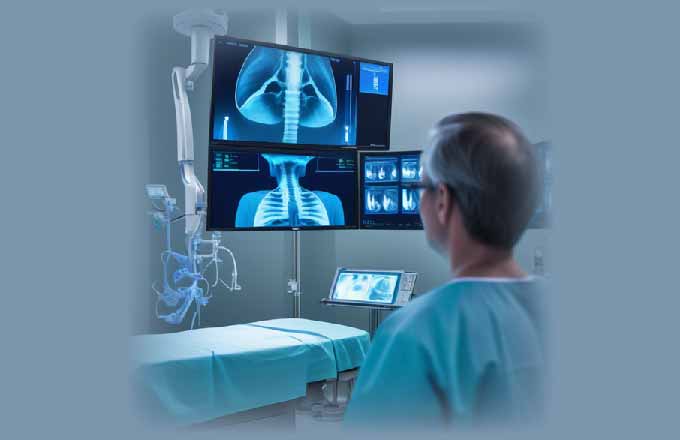
Minimally invasive deformity correction relies heavily on imaging and navigation. Fluoroscopy, intraoperative CT and neuronavigation provide real-time guidance, allowing tubular retractors and percutaneous screws to be placed accurately. These systems serve as a roadmap, enabling surgeons to work confidently through small incisions, while protecting delicate neural structures. Integrating advanced imaging has been crucial in making MIS feasible for complex deformities, where precision is key to successful outcomes.
Dr. Larry Davidson explains, “Combining advanced robotic tools with surgical expertise elevates patient care, by making procedures safer and recovery more manageable.” His perspective reflects how technology, when paired with skilled judgment, transforms MIS from a technical innovation into a patient-centered solution, that reduces risks and accelerates recovery.
Benefits for Patients
For patients, minimally invasive deformity correction offers several advantages. Smaller incisions reduce postoperative pain and lower the risk of infection. Preserved muscle tissue supports quicker rehabilitation, while reduced blood loss decreases the need for transfusions. Hospital stays are shorter, and patients often return to daily activities sooner than with open procedures.
These benefits are especially meaningful for older adults and those with other health conditions, who may face greater risks from traditional open surgery. MIS provides a safer alternative, without compromising effectiveness. Patients respond positively to these approaches, often expressing relief at being able to resume movement and independence more quickly after surgery.
Athletes and MIS in Deformity Care
Athletes with spinal deformities present unique challenges, requiring surgical solutions that preserve function, while correcting alignment. MIS techniques are particularly well-suited for these cases, as they minimize downtime and support a faster return to training.
Tubular retractors and percutaneous screws help athletes preserve strength and flexibility, by minimizing muscle disruption. Early rehabilitation is possible, and recovery is often faster than with traditional open procedures. Minimally invasive techniques have been applied to athletic patients, with surgical strategies tailored to balance spinal correction and performance goals.
Education and Training in MIS Techniques
The adoption of minimally invasive deformity correction has reshaped surgical education. Surgeons must learn new skills, including working through tubular retractors, placing percutaneous instrumentation and interpreting advanced imaging. These methods require practice and precision, as the margin for error can be small when working through narrow corridors.
Dr. Larry Davidson is a leader in training younger surgeons in these techniques. His mentorship emphasizes that while minimally invasive surgery offers many benefits, it also requires a high level of technical skill and judgment. By sharing his experience, he helps prepare the next generation of surgeons to deliver safe and effective minimally invasive care.
Patients as Partners in MIS Care
Patient education is central to minimally invasive surgery (MIS) approaches. Many patients are unfamiliar with the differences between open and minimally invasive procedures. Surgeons need to clearly explain the benefits, limitations and recovery expectations, so patients can make informed decisions. Shared decision-making helps align surgical plans with patient goals, whether those focus on faster recovery, reduced pain or improved mobility. Active patient involvement is crucial, as engaged patients are more likely to follow rehabilitation plans and achieve better outcomes.
Minimally invasive techniques have redefined how surgeons approach spinal deformity correction. Tools, such as tubular retractors and percutaneous instrumentation, make it possible to achieve alignment while reducing trauma, blood loss and recovery time. The leadership in adopting and teaching these methods underscores their value in modern spinal care. This work highlights how precision tools, advanced imaging and patient-centered planning combine to create safer and more effective surgeries, giving patients the opportunity to regain function and independence, with less disruption.
