

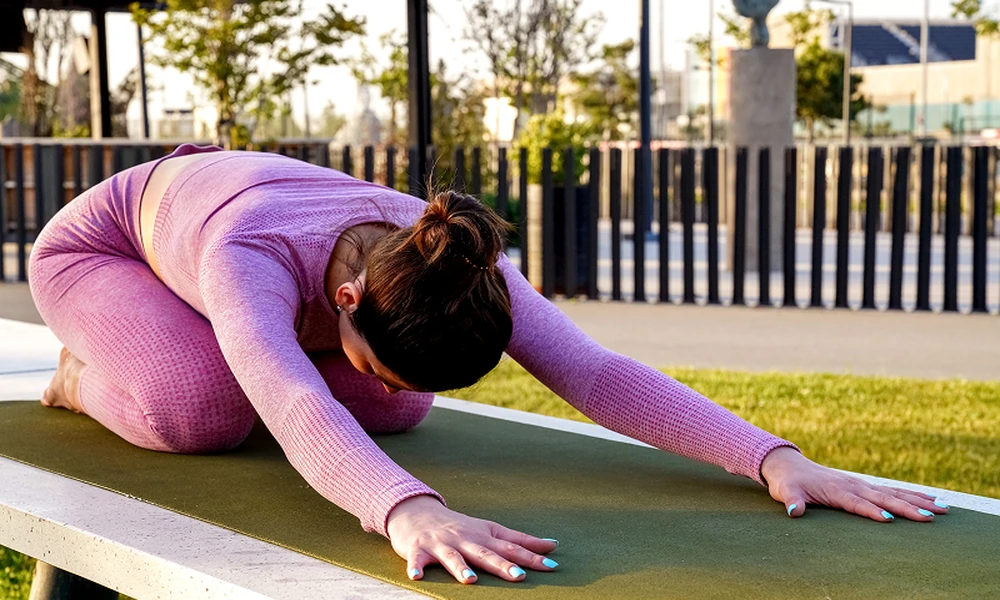
A slow-paced, quiet yoga class doesn’t look like the kind of workout that leaves anyone sore the next day. Plenty of people still wake up stiff and aching after their first one anyway, and the usual reaction is to assume they did something wrong, pushed too hard, or picked the wrong class entirely. Most of the time, none of that is true. The soreness is a normal response to using muscles in ways they aren’t used to, not a sign the practice was a bad fit. It tends to catch first-timers off guard precisely because nothing about the class felt strenuous while it was happening.
Why Something This Gentle Can Still Leave You Sore
Yoga poses stretch muscles in directions daily movement rarely asks of them, even ones that already feel reasonably active day to day. A lot of the work in a class also comes from eccentric contractions, where a muscle lengthens under tension rather than shortening, which can cause tiny amounts of microscopic damage to muscle and connective tissue. The body’s inflammatory response to that damage is what shows up as soreness a day or two later. This is common enough in yoga for beginners that it’s worth knowing before a first class, not after, so it doesn’t come as an unpleasant surprise. None of this is unique to yoga either; the same thing happens with most new forms of movement the body hasn’t adapted to yet, yoga just has a reputation for being gentle enough that people don’t expect it.
How Long It Normally Lasts, and Why
This kind of delayed soreness typically appears twelve to forty-eight hours after a class and tends to peak somewhere in that window before easing off. For most people, it settles within three to five days, though exactly how long depends on fitness level, how intense the class was, and how new those particular movements were to begin with. It’s generally considered part of an adaptation process rather than a setback: once the tissue recovers, those same muscles tend to handle the next class with less strain, not more. A warm-up beforehand won’t prevent it outright, but it does help the body ease into the movements rather than meeting them cold, which is part of why many classes build in a slower opening sequence before anything more demanding begins.
What Tends to Help, and What Tends to Backfire
| Tends to Help | Tends to Backfire |
| Drinking water and getting enough sleep to support recovery | Reaching for caffeine or energy drinks to push through the tiredness |
| Moving gently, at a lower intensity than usual, rather than resting completely | Stopping movement altogether until the soreness fully disappears |
| A gentle foam roller or a warm bath to ease general tension | Long, intense, or static stretching aimed directly at the sorest spots |
| Eating a balanced post-class meal with some protein in it | Assuming more soreness always means better progress |
What This Doesn’t Mean About the Class Itself
None of this is a sign to switch to a more intense style to “get it over with” faster, or to assume a slower class wasn’t doing enough. The soreness comes from using unfamiliar muscles and movement patterns, not from how hard a class looked from the outside, and a slower, more careful class can produce just as much of it as a faster one, sometimes more, depending on which muscles get held in a stretch for the longest. It’s also worth remembering that soreness tends to fade with regular practice, not because the body toughens up against the work, but because the same muscles and movement patterns stop being unfamiliar.
When It’s Worth Getting Checked Instead of Waiting It Out
Ordinary post-class soreness is dull, spread across a muscle rather than centred on a joint, and improves day by day rather than staying flat or worsening. Sharp pain, swelling, or discomfort that doesn’t ease after about a week doesn’t fit that pattern, and is worth mentioning to a doctor rather than working through alone. The distinction matters because the two call for opposite responses: ordinary soreness tends to respond well to gentle movement, while an actual injury usually needs rest and a proper assessment instead. Anyone managing an existing injury or a chronic condition should check with a doctor before starting a new practice in general, since what counts as normal varies from person to person and isn’t something a general guide can determine on its own.
A good instructor can also help tell the difference between the two before it becomes a bigger question. Contact The Yoga House to find a beginner-friendly class and ease in at a pace that suits you.
