

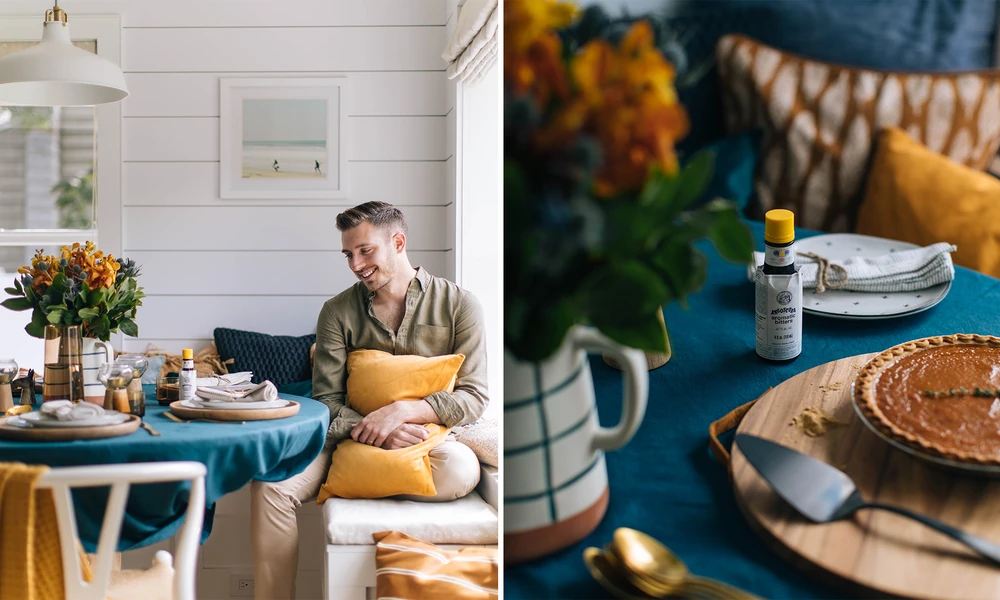
Hosting friends for dinner sounds easy until you start planning it.
Suddenly you are thinking about appetizers, table settings, playlists, drinks, dietary restrictions, desserts, candles, serving dishes, and whether your apartment needs to be cleaned more thoroughly than it has been in the past six months.
It does not have to become a production.
Fall is actually one of the easiest seasons for casual hosting because the atmosphere does much of the work for you. Cooler evenings, warm food, softer lighting, and a few seasonal touches can make a simple dinner feel far more special than it really is.
The goal is not to recreate a restaurant at home.
It is to create an evening where people want to stay at the table a little longer.
Keep the Guest List Manageable
Start small.
Four to six people is often the sweet spot for a relaxed dinner at home. It is enough for lively conversation without requiring an enormous table or restaurant-level food preparation.
A smaller group also means you can serve food family-style instead of worrying about plating individual meals.
If your dining table is too small, do not treat that as a reason not to host.
Use the coffee table.
Add chairs from another room.
Serve dinner buffet-style and let people sit wherever they are comfortable.
A slightly imperfect setup usually feels more relaxed anyway.
Choose One Main Dish
The easiest way to make hosting stressful is to prepare six complicated dishes at once.
Choose one main dish that can do most of the work.
Good fall options include:
-
Baked pasta
-
Lasagna
-
Chili
-
Curry
-
Roast chicken
-
Vegetable pie
-
Slow-cooked stew
-
Risotto
-
Stuffed squash
-
Homemade soup with bread
Ideally, choose something you can prepare partially or completely before guests arrive.
Nobody enjoys hosting while simultaneously trying to determine whether chicken is cooked in the middle and maintaining a conversation from across the kitchen.
Serve Food in the Middle of the Table
Family-style serving immediately makes dinner feel more informal.
Put the main dish, sides, bread, and salads in the center and let everyone help themselves.
It also solves the problem of guessing portion sizes.
Somebody who wants another spoonful can take it. Someone who does not like a particular side can skip it without making the situation awkward.
Large serving dishes also look inviting without requiring elaborate presentation.
Do Not Overcomplicate the Table
You do not need special autumn dinnerware.
Use the plates and glasses you already own.
If you want the table to feel seasonal, add one or two simple details.
A few candles are enough.
You could also use small pumpkins, branches, dried flowers, apples, or a simple bowl of pears as a centerpiece.
Avoid anything so large that guests have to lean sideways to see one another.
The centerpiece should decorate the table, not occupy it.
Use Warm Lighting
Lighting probably contributes more to the atmosphere than anything you place on the table.
Turn off harsh overhead lights if possible.
Use lamps around the room and add candles to the dining area.
The room should still be bright enough for everyone to see what they are eating, but slightly softer lighting makes even an ordinary table feel more intentional.
If you are using real candles, keep them away from napkins, dried leaves, curtains, and anything else that can catch fire.
Battery-operated candles are perfectly fine if you prefer not to think about it.
Have Drinks Ready Before Guests Arrive
The first few minutes are easier when you can immediately offer everyone something to drink.
You do not need a complicated cocktail menu.
Water, sparkling water, juice, coffee, tea, or cider can be enough.
You could also prepare one seasonal option in advance. A Hot Drink Popular in the Fall works particularly well after dinner when everyone has moved away from the table and settled into conversation.
The important part is having the basics ready so you are not searching cupboards while people stand awkwardly near the entrance.
Create a Playlist That Can Stay in the Background
Music helps fill the occasional silence without dominating the room.
Choose something relaxed.
Jazz, acoustic music, soul, soft indie tracks, instrumental playlists, or familiar classics usually work well.
Keep the volume low enough that nobody has to speak over it.
The best dinner-party music is often the music people notice only when it stops.
Make Dessert Easy
Dessert does not need to be homemade.
This deserves repeating.
Buy a good pie.
Pick up pastries from a bakery.
Serve ice cream with warm brownies.
Buy a cake you already know everyone likes.
If you genuinely enjoy baking, then make something. But there is little value in spending three hours preparing an elaborate dessert when you could use that time making the rest of the evening easier.
A store-bought apple pie warmed in the oven and served with ice cream will rarely receive complaints.
Prepare More Than You Think You Need
Running out of food is much more stressful than having leftovers.
You do not need enough to feed twice the number of guests, but make slightly more than your estimated portions.
Bread is particularly useful.
It is inexpensive, works with most autumn meals, and can stretch dinner if people are hungrier than expected.
Keep some extra drinks available too.
Whatever survives the evening becomes tomorrow’s lunch.
Clean Strategically
Do not attempt to deep-clean your entire home before guests arrive.
Focus on the areas people will actually use.
Clean the bathroom.
Clear the dining table.
Tidy the living room.
Empty the kitchen sink.
Take out the trash.
Make sure there is somewhere obvious for coats and bags.
Nobody is going to inspect your bedroom cupboards.
Hosting becomes much easier when you stop cleaning for imaginary inspectors.
Let People Help
If someone asks whether they can bring something, give them something.
Bread.
Dessert.
Drinks.
Ice.
A salad.
People often genuinely prefer contributing rather than arriving empty-handed.
Likewise, if someone offers to carry plates or clear the table after dinner, let them.
Hosting does not require pretending you run a fully staffed restaurant.
Have Something to Do After Dinner
You do not need organized entertainment, but it helps to have an easy option available.
That might be:
-
A deck of cards
-
A simple board game
-
A movie
-
A playlist everyone can add songs to
-
Dessert in another room
-
Coffee on the balcony
-
A fire pit if you have outdoor space
Sometimes everyone will simply continue talking for another three hours.
That is usually a sign the dinner went well.
Do Not Spend the Whole Evening Hosting
This is the part people often forget.
You invited everyone because you wanted to spend time with them.
If you spend the entire evening disappearing into the kitchen, refilling everything immediately, wiping surfaces, and worrying about whether people are entertained, you miss your own dinner.
Leave the dishes.
Sit down.
Have another drink.
Finish the conversation.
The plates will still be there later.
A good fall dinner is rarely memorable because every detail was perfect.
People remember the food they liked, the conversation that lasted longer than expected, the music in the background, and the feeling that nobody was in a hurry to leave.
That is enough.
